|
|
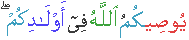
اللہ تعالیٰ تم لوگوں(بنی نوع انسان) کو تمہاری اولاد کے مابین ترکے کی تقسیم کے متعلق وصیت/پابند کررہے ہیں اورہمیشہ کے لئے پابند کر دیا ہے؛بحثیت فرد اور معاشرہ: Root: و ص ى |
|
|
اللہ تعالیٰ تم لوگوں(بنی نوع انسان) کو تمہاری اولاد کے مابین ترکے کی تقسیم کے متعلق وصیت/پابند کررہے ہیں اورہمیشہ کے لئے پابند کر دیا ہے؛بحثیت فرد اور معاشرہ: Root: و ص ى |
|
|
تمہاری اولاد میں موجوددو مؤنث جنس رکھنے والی کے حصے میں آنے والی مقدار کے مماثل اولاد میں موجود مذکر جنس رکھنےوالے کا استحقاق مقرر کیا جاتا ہے(مؤنث،مذکر کے استعمال سے بن کہے اولاد میں مخنث شامل ہے)۔ |
|
|
اس اصول تقسیم کے پیش نطر اگر وہ(اولاد بجائے مذکر کی شمولیت کے)عورتوں پر مشتمل ہے جو بیان کردہ دو مؤنث سے اوپر کے مقام پر ہو جاتی ہیں تو بھی ان کے مابین تقسیم کےلئے اس ترکے کے دو تہائی پر استحقاق ہے جو مرحوم نے چھوڑا۔ Root: ف و ق |
|
|
اور اگر اولاد فقط ایک مؤنث ہے تو اس صورت میں ترکے میں سے نصف پر اس کا استحقاق ہے۔ Root: ن ص ف |
|
|
ایک مختلف صورت حال کے متعلق وصیت یہ ہے؛اس ترکے کا چھٹواں چھٹواںحصہ اس میں سے جو مرحوم مرد نے چھوڑا ہے اس کے سوگوار ماں اورباپ ہر ایک کے لئے استحقاق ہے اگر ایک بیٹا اس کے لئے وارث موجود ہے۔ |
|
|
مگر اگر ایک بیٹا اس کا وارث بننے کے لئے موجود نہیں ہے اور اس مرحوم مرد کے ماں باپ اس کے وارث بننے کے لئے زندہ ہیں تو اس صورت میں اس کی ماں(اگرچہ اس وقت اس کے باپ کے نکاح میں نہ رہی ہو)کا قابل تقسیم میراث کےتیسرے حصے پر استحقاق ہے۔ Root: و ر ث |
|
|
لیکن اگر مرحوم کے سوگوران میں والد سگے بہن بھائی بھی زندہ ہیں تو پھر اس کی ماں کے لئے استحقاق قابل تقسیم میراث کےصرف چھٹے حصے پر ہے۔ Root: س د س |
|
|
یہ اللہ تعالیٰ کی جانب سے وصیت کردہ استحقاق غالب رہے گا جو قریب المرگ مرد اس وقت اپنے والدین اور قریبی تعلق داروں کے لئے وصیت کر رہا ہے،یا/ اور اس پر واجب الادا کاروباری ادائیگی کے بعد،اگر ہے تو۔ Root: و ص ى |
|
|
محتاط رہو؛ جہاں تک تمہارے آباء اور بیٹوں کا تعلق ہے تمہیں یقین سےنہیں معلوم کہ ان میں سے کون تمہارے لئے زیادہ قریب ہو گا،فائدہ مند ہونے کے حوالے سے۔ Root: د ر ى |
|
|
یہ وراثت میں استحقاق اور تقسیم کے متعین کردہ پیمانہ سے ابتدا کرنا اللہ تعالیٰ کی جانب سے ہمیشہ کے لئے فریضہ کی حیثیت رکھتا ہے۔ Root: ف ر ض |
|
|
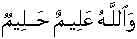
اللہ تعالیٰ کے متعلق یہ حقیقت ہے کہ منبع علم ہیں،تمام نظام کے بدرجہ اتم انصاف کے تقاضوں کو پورا کرنے والےفرمانروا ہیں۔ |
|
|
اوراس کاآدھا جو تمہارے نکاح میں ہوتے ہوئے تمہاری بیویوں نے وقت مرگ ترکہ چھوڑا ہے تم خاوندوں کا استحقاق مقرر کیا گیا ہے بشرطیکہ ایک بیٹا(تمہارے صلب یا پہلے خاوند سے)ان کا وارث بننے کے لئے موجود نہیں۔ Root: ن ص ف |
|
|
اور اگر ایک بیٹا ان کا وارث بننے کے لئے موجود ہے تو اس صورت میں اس ترکے کے ایک چوتھائی پر تمہارا استحقاق ہے جو انہوں نے وقت مرگ چھوڑا ہے۔ |
|
|
یہ اللہ تعالیٰ کی جانب سے وصیت کردہ استحقاق غالب رہے گا جو قریب المرگ خواتین اس وقت اپنے والدین اور قریبی تعلق داروں کے لئے وصیت کر رہی ہیں اور بعد ازاُن پر واجب الادا کاروباری ادائیگی کے ،اگر ہے تو۔ Root: و ص ى |
|
|
اور اس ترکے کے ایک چوتھائی پر جو تم خاوندوں نے اپنے مرگ کے وقت چھوڑا ہے ان(بیواؤں)کا استحقاق ہے بشرطیکہ ایک بیٹا تمہارا وارث بننے کے لئے موجود نہ ہو، Root: ر ب ع |
|
|
لیکن اگر ایک بیٹا تمہارا وارث بننے کے لئے موجود ہے تو اس صورت میں ان (بیواؤں)کا آٹھویں حصے پر استحقاق ہے اس ترکے جو تم نے وقت مرگ چھوڑا ہے۔ Root: ت ر ك |
|
|
یہ اللہ تعالیٰ کی جانب سے وصیت کردہ استحقاق غالب رہے گا جو قریب المرگ تم مرد اس وقت اپنے والدین اور قریبی تعلق داروں کے لئے وصیت کر رہےہو یا/ اور واجب الادا کاروباری ادائیگی کےبعد، اگر ہے تو۔ Root: و ص ى |
|
|
اور اگر معاملہ ایک ایسےمورث مرد یا عورت کا ہو جوبغیر بیوی یا بغیر خاوندکے موجود ہونے ،اور والدین میں سے ایک زندہ ہونے پر ترکہ چھوڑ گئے ہیں اوران کی خاص بات یہ بھی ہے کہ ایک بھائی یا ایک بہن اس کے سوگواران میں موجود ہے تو ان دونوں میں سے ہر ایک کےلئے ترکے کا چھٹا حصہ ہے،چاہے بھائی ہے یا بہن۔ |
|
|
مگر اگر وہ بہن بھائ ایک سے زیادہ ہیں تو بھی وہ سب ترکے کے ایک تہائی میں سب شریک ہوں گے۔ Root: ث ل ث |
|
|
یہ اللہ تعالیٰ کی جانب سے وصیت کردہ استحقاق اس وصیت پرغالب رہے گا جو اس وقت والد/والدہ اور قریبی تعلق داروں کے لئے کی جا رہی ہے یا/ اور واجب الادا کاروباری ادائیگی کےبعد، اگر ہے تو۔مورث کی ایسی وصیت قابل عمل ہے جو اس نے بغیر جھکاو اور حق تلفی کے کی ہے۔ Root: و ص ى |
|
|
یہ مندرجہ بالا تقسیم،وراثت میں استحقاق و اختصاص اللہ تعالیٰ کی جانب سے وصیت/بندھن ہے۔ Root: و ص ى |
|
|
معترف رہو کہ اللہ تعالیٰ منبع علم ہیں،مکمل معلومات رکھتے ہیں،بدرجہ اتم بردبار،جذبات سے منزہ ہیں۔ Root: ح ل م |
|
|
دھیان رہے؛مندرجہ بالا اللہ تعالیٰ کی جانب سے مقرر کردہ فعل و عمل کی آزادی اور قیود ہیں۔ |
|
|
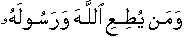
ان کے متعلق حقیقت جان لو جنہوں نے اللہ تعالیٰ اور ان کے رسول (ﷺ)کے قول(قرءان عظیم)کو صدق دل سے تسلیم کیا۔ |
|
|
وہ جناب اسے ایسے باغوں میں داخل فرمائیں گے جن کے پائیں نہریں بہتی ہیں۔یہ لوگ ہمیشہ ان میں رہیں گے۔ |
|
|
اوریہ زندگی بھر کی کامیابی کا عظیم ایوارڈ ہے۔ Root: ف و ز |
|
|
اور ان کے برعکس جس کسی نے اللہ تعالیٰ اور ان کے رسول(ﷺ)کے فرمان کی مخالفت اور نافرمانی کی۔ |
|
|
اورجس نےدانستہ اورذاتی منفعت کے مقصد سے اللہ تعالیٰ کی مقرر کردہ معاشرتی حدود سے تجاوز کیا۔ |
|
|
وہ جناب اس شخص کو جہنم میں داخل کریں گے،وہ اس میں ہمیشہ قیام پذیر رہے گا۔ |
|
|
اور ذلت آمیز عذاب اس کے لئے تیار اور منتظر ہے۔ Root: ھ و ن |
Inheritance according to injunctions in Grand Qur’ān
Syntactic analysis

Allah the Exalted is enjoining - binding you the parents concerning [distribution of inheritance-moveable and immovable assets amongst] the Progenies of you people.

 :
It is a complete verbal sentence; Verb-fronted Object-Subject.
Verb is Imperfect; Third Person; Singular; Masculine; [Form-IV]; Mood:
Indicative. Its source is مصدر-إِيْصَاءٌ
Verbal noun and Root is " و
ص ى". Form-IV verb is
Causative: causing someone or something to perform the
action of Form-I. It thus signifies: Allah the Exalted is enjoining upon you people; is
binding-tying-exhorting you the parents.
This object pronoun in context does not include
people who are bachelor adults, or have died barren.
:
It is a complete verbal sentence; Verb-fronted Object-Subject.
Verb is Imperfect; Third Person; Singular; Masculine; [Form-IV]; Mood:
Indicative. Its source is مصدر-إِيْصَاءٌ
Verbal noun and Root is " و
ص ى". Form-IV verb is
Causative: causing someone or something to perform the
action of Form-I. It thus signifies: Allah the Exalted is enjoining upon you people; is
binding-tying-exhorting you the parents.
This object pronoun in context does not include
people who are bachelor adults, or have died barren.

 :
It is a prepositional phrase coupled with possessive phrase. In semantic
terms, the preposition functions to illustrate a logical,
temporal, or spatial relationship between the object of the
prepositional phrase and the other components of the sentence.
Prepositions can act as an adjective modifying a noun, and here
as an adverb
it links to the preceding verb. Preposition is used adverbially and
means "about, concerning".
:
It is a prepositional phrase coupled with possessive phrase. In semantic
terms, the preposition functions to illustrate a logical,
temporal, or spatial relationship between the object of the
prepositional phrase and the other components of the sentence.
Prepositions can act as an adjective modifying a noun, and here
as an adverb
it links to the preceding verb. Preposition is used adverbially and
means "about, concerning".
: The suffixed pronoun of Possessive Phrase refers to second person, masculine, plural
and refers the society collectively including its individual
members,
both genders, all the parents. In
consideration of the possessive Pronoun [مضاف
إليه] of the
Possessive Phrase being Definite the First Noun [مضاف]
is definite like:
 : It is a
broken paucity plural
feminine noun [pattern أَفْعَالٌ];
but grammatically it is used both in
feminine singular and plural senses. It denotes
off-springs at least three in number, the daughters, or the sons, or
grouped progenies comprising of females: girls-women: daughters
and male-boys-men: sons; all being three or more in number. However, the broken plural
exclude the dual number like one daughter and one son; two
daughters, or two sons. Since its singular is:
: It is a
broken paucity plural
feminine noun [pattern أَفْعَالٌ];
but grammatically it is used both in
feminine singular and plural senses. It denotes
off-springs at least three in number, the daughters, or the sons, or
grouped progenies comprising of females: girls-women: daughters
and male-boys-men: sons; all being three or more in number. However, the broken plural
exclude the dual number like one daughter and one son; two
daughters, or two sons. Since its singular is:
 a son is also excluded as its referent.
The superb choice of this broken paucity plural feminine noun reflects the beauty of succinctness in the Qur’ān. Feminine singular and plural pronouns of subsequent Verbs in the text could refer back to it, affording economy. The hidden subject of a singular masculine verb or a singular masculine third person pronoun of a possessive phrase, however, cannot be referent to this plural feminine noun. Another aspect of its choice is that it has in its ambit the children, the semi-adults and progenies of strengthen maturity.
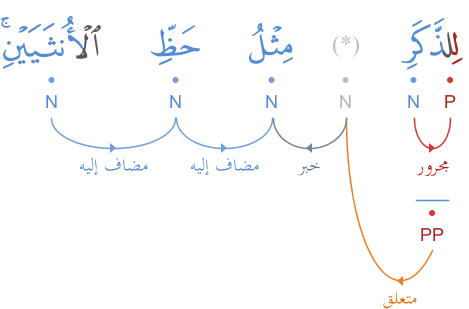
The like of the fortune accrued to the two females, which is twice the amount accrued to one female, shall be allocated for the male in the progenies.
This is an inverted nominal sentence explaining the first tie enjoined by Allah the Exalted. It is always the Subject/topic about which ascription-predication is given. In English, subject comes first and then its predicate. In Arabic, order can be inverted. Therefore, while translating into English, care must be taken not to render the subject as predicate and the predicate as subject; otherwise it will totally distort the perception of source language text.
مِثْلُ حَظِّ ٱلۡأُنْثَيَيْـنِ These three words constitute a grammatical unit; and comprise of two successive Possessive Phrases. The first two nouns are definite since the last possessive noun is definite by definite article.
مِثْلُ : It is the delayed subject of the sentence. Otherwise indefinite, it is definite being first noun of consecutive two possessive phrase whose last noun is definite by definite article. It is a figure of speech termed as simile or comparison when the resemblance between two objects is expressed in form. A likening makes the principal object plainer and impresses it more forcibly on the mind. The principle object illustrated by it is quantitative:
حَظِّ ٱلۡأُنْثَيَيْـنِ: Possessive Phrase, signifies, the fortune accrued to the alive two female off-springs; the sum of amount accruing to each of them.
حَظِّ: Its Root is "ح ظ ظ". Basic perception infolded in the Root is that of luck, fortune, allowance. Translating it, as is done by the majority of translators, by English words "share, portion" are not equivalent to Arabic word, rather it causes distortion and ambiguity. English word "share" as verb means to use something along with others; to divide something equally between people: to allocate equal parts of something to different people or groups; and as noun it denotes a part of something allotted. Similarly, portion means a fraction: part or section of a larger whole. Thus, these English words in this sentence will denote as if it is referring to the measure of size allocated to two females. Arabic word does not signify sub-set/ordinal number like one-third; two-thirds etc. The sentence is not referring to division of the whole unit, the divisible inheritance, into sub-divisions like one-third, one-forth, one-sixth, one-eighth, and two-thirds. The sentence is merely apportioning the sum of actual amount accruing to two females for the male. The word: مِثْلُ in the phrases signifies that the male will have fortune twice the amount given to the female when the off-springs comprise a female and a male. Otherwise, if it were to restrict the fortune of the male to the presence of two females fortune this word would have not been in the sentence.
لِلذَّكَرِ: It is a Prepositional Phrase; preposition denotes "for" indicating that something is directed at somebody, done to benefit somebody. The object noun is definite by definite article signifying presence of one male in the progenies. This phrase appearing at the place of Subject of the sentence relates to elided predicate. Learned grammarians lay the principle that if the comment/predicate is a prepositional phrase, we will need to assume a hidden verb to which the phrase will connect. That hidden verb, along with the phrase, would then become an entire (embedded) sentence and then the comment for the greater sentence. Since a verbal noun can also function as verb, a verbal noun can also be estimated for relating the prepositional phrase.
It is thus apparent that Allah the Exalted is apportioning the sum of quantity-amount-fortune accruing to two females for the benefit of the alive male in the progenies. He gets twice the amount given to the female.
The definite article prefixed to both the nouns indicates the presence of two daughters and one son as off-springs of the deceased. The ratio-formula in such ground reality - cases of grouped progenies is given by gender, female vs. male; that the sub-set of wealth accruing to two females will be distributed amongst them by giving twice the fortune of the female to the male. The sub-set of wealth allocated for two females; when a son is partner along with them, will be sub-divided into four equal parts; one for each female and two parts for the male. Thus off-springs in grouped progenies are covered irrespective of their composition and number. But this sentence does not indicate the sub-set/ordinal number of wealth of deceased parent which will accrue to two females and/or grouped progenies. It is mentioned in the following sentence conjunct with preceding sentence by particle "fa" which signifies sequence, cause and effect:
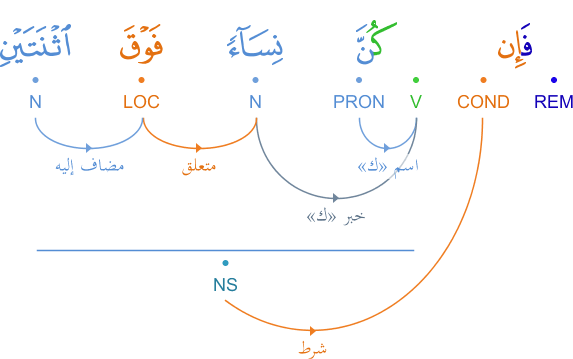
Thereby, instead of a male co-sharer, if other progenies were three or more women as partners/ co-sharers over/beside two females referred to above, thereat,
"فَ ": This sentence begins with a conjunction particle "فَ " which is distinct from conjunction particle "وَ"; Particle "فَ " illustrates a sequence, cause and effect relationship; a linkage with apodosis clause; and can link a subsequent clause with the preceding sentence to indicate a situation-reality-predication partly different to-instead of the earlier one. Particle "وَ" will not connect such linkage.
 :
It is
Particle of condition which renders the following verb in
Jussive state; means "if, should"
:
It is
Particle of condition which renders the following verb in
Jussive state; means "if, should"
 :
It is
deficient Verb: Perfect; third person; plural;
feminine; in Jussive
state by condition particle;
Suffixed Subject Pronoun, in nominative state referring to the
broken plural feminine noun: "the off-springs". This
conditional clause means: "if they (offspring) were..."
:
It is
deficient Verb: Perfect; third person; plural;
feminine; in Jussive
state by condition particle;
Suffixed Subject Pronoun, in nominative state referring to the
broken plural feminine noun: "the off-springs". This
conditional clause means: "if they (offspring) were..."
 :
Noun:
Indefinite;
plural;
feminine;
accusative, signifying three or more women. It is the predicate of
deficient verb; ""if
the progenies were women [Arabic word women is plural signifying three
or more]"
:
Noun:
Indefinite;
plural;
feminine;
accusative, signifying three or more women. It is the predicate of
deficient verb; ""if
the progenies were women [Arabic word women is plural signifying three
or more]"
The particle and above three words literally mean "Thereby, instead of a male co-sharer, if other progenies were three or more women---".

 :
It is a Possessive Phrase. First noun,
Adverb of place,
is in accusative case and relates to elided
adjectival specification of preceding indefinite plural noun-women. It
is functioning as adverb phrase in the sentence. Adverb:
means, "on top of; over something, on or other side of".
Adverbs of place tell us
where something happens.
They are usually placed
after the main verb or after
the clause that they modify.
Adverbs of place do not
modify adjectives or other
adverbs.
:
It is a Possessive Phrase. First noun,
Adverb of place,
is in accusative case and relates to elided
adjectival specification of preceding indefinite plural noun-women. It
is functioning as adverb phrase in the sentence. Adverb:
means, "on top of; over something, on or other side of".
Adverbs of place tell us
where something happens.
They are usually placed
after the main verb or after
the clause that they modify.
Adverbs of place do not
modify adjectives or other
adverbs.
:
It is cardinal number to count two females.
The rule for cardinal number one
and two is that it agrees with the noun counted [الْمَعْدُودُ] and
follow the counted noun and functions as adjective or for emphasis. Since the progenies are partners-co-sharers in
the inheritance and the cardinal number refers to the two females, the
phrase
modifies the preceding verbal sentence that three or more women
are in progenies over/in addition to
two females referred to above.
The conditional sentence is followed by its apodosis clause:
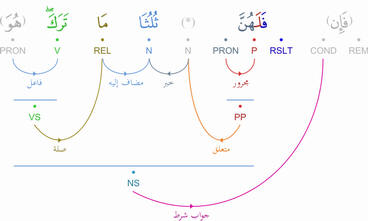
Thereat, two-thirds of the wealth which the deceased parent has left shall remain the apportionment for them all, irrespective of presence of two female sharers or additional sharers.
This apodosis clause in an inverted nominal sentence beginning with conjunction particle "فَ "
فَلَهُنّ : This is a Prepositional Phrase; preposition denotes "for" indicating that something is directed at somebody, done to benefit somebody. The object pronoun is third person, plural, feminine. This phrase relates to the elided predicate of the subject "the two-thirds of inheritance". The sentence literally means "Thereat , the two third of wealth which the deceased parent has left shall remain the apportionment for them all".
ثُلُثَا مَا تَرَكَ: The first two words constitute a Possessive Phrase. First noun is definite dual in nominate case which signifies two-thirds of some quantity; and it is the subject of sentence. Possessive noun is a Relative Pronoun and the following verbal sentence; verb perfect third person singular masculine with hidden subject pronoun, is the linkage clause of Relative pronoun with object elided. This sentence means "the two-thirds of that wealth which he the deceased has left behind".
The above
two sentences; comprising of a conditional clause and apodosis
clause, conjunct to previous sentence, were erroneously translated
by the earliest Christian translators as under:
George Sale:
But if they be females
only, and above two in number,
they shall have two-third parts of what the deceased shall
leave;
John Rodwell: and if they be females more than two, then they shall have two-thirds of that which their father hath left:
Though majority of translators have repeated likewise, few translators including Yusuf Ali have translated it as "if only daughters, two or more, their share is two-thirds of the inheritance;"
Firstly, the Progenies of those parents are mentioned who are granted off-springs by grouping two females and a male, and then those whom only females were granted. The case of those who are granted progeny of solitary son is not mentioned here [refer 42:49-50]. In case there are additional number of women off-springs instead of a son, the inalienably apportioned share for them shall remain restricted to Two Thirds of wealth the deceased Father, or Mother has left behind.
:
This adverbial phrase was not needed if the intent was to
allocate the share exclusively for women since it already signifies
three or more women. Since the progenies are partners-co-sharers
in the inheritance, the elided specification for:
is
evidently:
 partners, co-sharers in the numerical apportionment for two females. The
numerical share apportioned for
two females is two-thirds which will remain restricted to two-thirds irrespective of the fact
if there were more sharers/partners to it. A
similar situation in respect of siblings is mentioned in Ayah
4:176 where the sequence of sentences is reversed which further
clarifies the sentences of Ayah 4:11. A comparison will help
perceive the meanings quite vividly:
partners, co-sharers in the numerical apportionment for two females. The
numerical share apportioned for
two females is two-thirds which will remain restricted to two-thirds irrespective of the fact
if there were more sharers/partners to it. A
similar situation in respect of siblings is mentioned in Ayah
4:176 where the sequence of sentences is reversed which further
clarifies the sentences of Ayah 4:11. A comparison will help
perceive the meanings quite vividly:
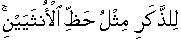

The equivalent of the amount accruing to the surviving two females shall be the sum allocated for the male surviving with them.
Thereby, instead of a male co-sharer, if other progenies were three or more women as partners/ co-sharers over/in addition to two females referred to above; thereat, two-thirds of the wealth which the deceased parent has left shall remain the apportionment for them all, irrespective of presence of two female sharers or additional sharers. [refer 4:11]


However, if there were two surviving Sisters, thereat, two-thirds of that which he the deceased has left shall be allocated to them.
And if they were siblings, comprising men and women, thereat, the two-thirds allocation shall be subdivided on the principle that equivalent of the amount accruing to the surviving two females shall be the sum allocated for the male. [refer 4:176]
The gender in both cases is feminine. Same sentence prescribing the ratio-formula between females and males occurs in both cases. In 4:176 it is mentioned in sequence; presence of one female, or two females, and siblings comprising men and women whereby the same sentence about distributive ratio between female and male finds mention. In respect of progenies the same information is given in reverse order. The difference is of relationship, daughters and sisters The subsequent clause; portraying a different ground situation that if instead of two females in the progeny there was only one daughter, leaves no room to deny that the share of inheritance shall be two-thirds in case of only two females in the progeny of the deceased:
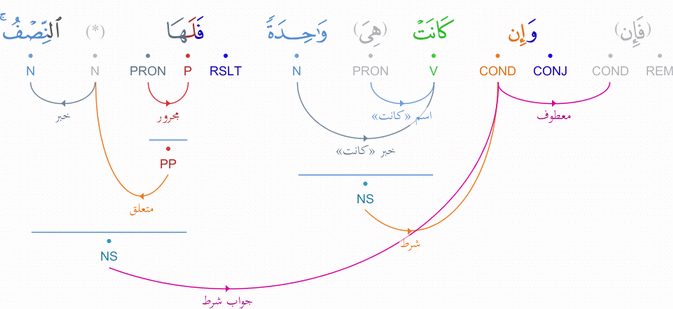
And if the progeny were a solitary female: thereby, one-half of wealth which the deceased parent has left is apportioned for her.
This sentence is conjunct to previous sentence through conjunction
particle. It is Condition Sentence with:
Conditional Particle.
 :
It is
Perfect feminine singular Verb in Jussive state as condition Verb. Its
Subject Noun is hidden referring
to the broken plural feminine noun: "the off-springs".
:
It is
Perfect feminine singular Verb in Jussive state as condition Verb. Its
Subject Noun is hidden referring
to the broken plural feminine noun: "the off-springs".
 :
It
is the Predicate of deficient verb meaning solitary female. The apodosis
clause is a nominal sentence:
:
It
is the Predicate of deficient verb meaning solitary female. The apodosis
clause is a nominal sentence:

 :
It is Inverted Nominal Sentence. Prepositional Phrase relates
to elided Predicate. Delayed subject of sentence is:
: the half.
:
It is Inverted Nominal Sentence. Prepositional Phrase relates
to elided Predicate. Delayed subject of sentence is:
: the half.
The injunction in four sentences in the earlier part of the Ayah covers the share allocated for the progenies of those who were granted either daughters, or in combination sons also. Their share shall not exceed two-third of the inheritance left by the deceased. Since the sharing in case of progenies is to start with a feminine, therefore, if the deceased has left a daughter and a son, this means three feminine shares because the share resembling share of two feminine is to be allocated for a male. This takes care of all the progeny regardless how many are they. Two-third of the Inheritance is reservedly allocated for them in all circumstances.
It must be noted
that in case of Progeny comprising a singular daughter, or two
daughters, two daughters and a son; or progenies exceeding two feminine sharers as
partners/co-sharer, Allah the
Exalted has not apportioned the share for other surviving kin in the
remaining
one third
or half wealth.
Allah the Exalted has not annulled or
superseded:
 the Bequest of the deceased in entirety.
It will prevail in respect of remaining part; if not modified by the
Survivor Kin of repute/court for reason of tilt or injustice by the Testator,
to distribute amongst relatively the nearer relatives.
the Bequest of the deceased in entirety.
It will prevail in respect of remaining part; if not modified by the
Survivor Kin of repute/court for reason of tilt or injustice by the Testator,
to distribute amongst relatively the nearer relatives.
Inheritance for parents when the deceased is their married son:
There can be a situation altogether different from the above. The married Son of a surviving Mother and Father dies. His Father and Mother may or may not still be mutually husband and wife at the time of death of their son. They might have separated during the life of their died Son. The Married Son of the Surviving Mother and Father may or may not have bereaved his own son:

Take note; One-sixth of the wealth which he the deceased has left behind is apportioned separately for each of his Father and Mother. This direction is to take effect in the situation if solitary son is surviving for him the deceased.
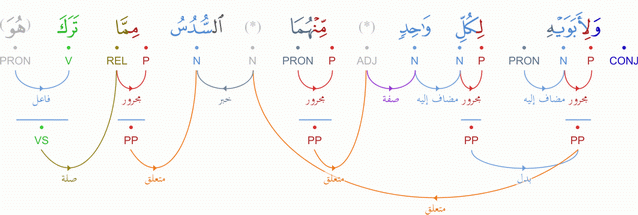
It is an inverted nominal sentence.
وَ: Conjunction particle [حرف عطف]. It is a coordinator that links to element in the preceding discourse.
 :
It is a Prepositional Phrase coupled with
Possessive Phrase. It relates to the
fronted elided predicate, a verb or verbal noun,
which is evidently understood by the preposition. Preposition
denotes "for" indicating that something is directed at somebody,
done to benefit somebody. Its object noun is definite by
construct as the possessive pronoun is definite. The pronoun
refers third person, singular, masculine. A pronoun is used to
refer back to the definite noun already mentioned. It links back
to "the alive male" in the progenies.
:
It is a Prepositional Phrase coupled with
Possessive Phrase. It relates to the
fronted elided predicate, a verb or verbal noun,
which is evidently understood by the preposition. Preposition
denotes "for" indicating that something is directed at somebody,
done to benefit somebody. Its object noun is definite by
construct as the possessive pronoun is definite. The pronoun
refers third person, singular, masculine. A pronoun is used to
refer back to the definite noun already mentioned. It links back
to "the alive male" in the progenies.

 :
It is a
Prepositional Phrase coupled with Possessive Phrase. It is
Equivalent Appositive [البَدَلُ]
to the preceding two phrases.
"The Equivalent Appositive is a word which has attributed to it
whatever is attributed to its principle while the subordinate is intended for
the attribution not its principle".
It resembles to English language "restrictive appositive"
when the second element limits or clarifies the foregoing
one in some crucial way. These phrases mean "for each one".
:
It is a
Prepositional Phrase coupled with Possessive Phrase. It is
Equivalent Appositive [البَدَلُ]
to the preceding two phrases.
"The Equivalent Appositive is a word which has attributed to it
whatever is attributed to its principle while the subordinate is intended for
the attribution not its principle".
It resembles to English language "restrictive appositive"
when the second element limits or clarifies the foregoing
one in some crucial way. These phrases mean "for each one".
 : It is a Prepositional Phrase
relating to elided specification for the preceding indefinite
active participle. This clause takes care of
a situation where the
father and mother of the deceased Man might be in
a separated state-Matrimonial Bond broken, or even his Mother had become
during his life the wife of
a man other than his Father. The right of some such Mothers could
be in jeopardy if it were left to the Will of deceased son.
: It is a Prepositional Phrase
relating to elided specification for the preceding indefinite
active participle. This clause takes care of
a situation where the
father and mother of the deceased Man might be in
a separated state-Matrimonial Bond broken, or even his Mother had become
during his life the wife of
a man other than his Father. The right of some such Mothers could
be in jeopardy if it were left to the Will of deceased son.
 :
It is definite ordinal number. This is the delayed subject of the nominal sentence
meaning the one-sixth
:
It is definite ordinal number. This is the delayed subject of the nominal sentence
meaning the one-sixth
 It is a Prepositional
Phrase comprising of preposition and its object is Relative pronoun with "ن" having been assimilated. It
relates to the preceding subject of the sentence; "one-sixth of that
which":
It is a Prepositional
Phrase comprising of preposition and its object is Relative pronoun with "ن" having been assimilated. It
relates to the preceding subject of the sentence; "one-sixth of that
which":
 :
Verb: Perfect;
third person; singular; masculine;
Subject pronoun hidden which refers to the male
deceased; مصدر-تَرْكٌ
Verbal Noun. It is linkage clause for the preceding Relative Pronoun and
its object is elided. These three words mean: "one-sixth of that wealth
which he the deceased has left".
:
Verb: Perfect;
third person; singular; masculine;
Subject pronoun hidden which refers to the male
deceased; مصدر-تَرْكٌ
Verbal Noun. It is linkage clause for the preceding Relative Pronoun and
its object is elided. These three words mean: "one-sixth of that wealth
which he the deceased has left".
The sentence is followed by a conditional clause restring operation/effect subject to the condition:
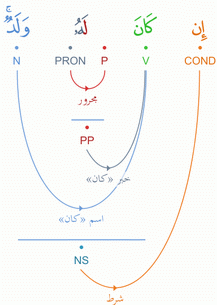
This direction is to take effect in the situation if solitary son is surviving for him the deceased.
This is a conditional clause; apodosis clause is elided since the resultant effect of this situation has already been mentioned in the preceding Nominal Sentence.
Conditional Particle.
 Verb: Perfect;
third person; singular; masculine;
Verb: Perfect;
third person; singular; masculine;
 : Prepositional
Phrase: لَ
Inseparable Preposition
+ Personal Pronoun:
Third person; masculine; singular, in genitive state; meaning "for him
the deceased". It relates to elided predicate of the
deficient verb. The singular masculine pronoun
refers to the deceased Man.
: Prepositional
Phrase: لَ
Inseparable Preposition
+ Personal Pronoun:
Third person; masculine; singular, in genitive state; meaning "for him
the deceased". It relates to elided predicate of the
deficient verb. The singular masculine pronoun
refers to the deceased Man.
:
Noun: Indefinite; singular; masculine;
nominative. It is [اسم كان]
the subject noun of deficient perfect verb.
It signifies
a son;
translating it as "child" is erroneous
it refers to human off-spring:
a son or daughter
of human parents.
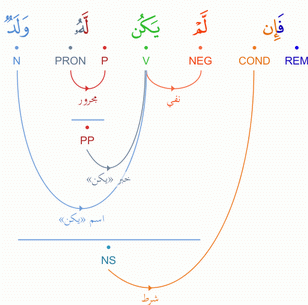
Take note: if there were not a son surviving for him;
It is a conditional sentence giving a ground reality different to when the deceased was bereaved by a son along with his alive parents.

 :
The past tense event is negated by
preceding the verb with particle of negation: لَمْ.
The particularity of this particle is that the form of the past tense is
substituted with the same tense of imperfect verb and the present tense
verb is transformed into jussive mood.
:
The past tense event is negated by
preceding the verb with particle of negation: لَمْ.
The particularity of this particle is that the form of the past tense is
substituted with the same tense of imperfect verb and the present tense
verb is transformed into jussive mood.
: Prepositional
Phrase: لَ
Inseparable Preposition
+ Personal Pronoun:
Third person; masculine; singular, in genitive state; meaning "for him
the deceased". It relates to elided predicate of the
deficient verb. The apodosis clause of this conditional sense is elided
since it has already been mentioned.
:
Noun: Indefinite; singular; masculine;
nominative. It is [اسم يكن]
the subject noun of deficient perfect verb.
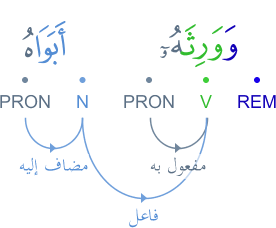
And his Father and Mother have survived/inherited him,
This is the circumstantial clause depicting the deceased who died without leaving a son but his parents are alive who inherited him.
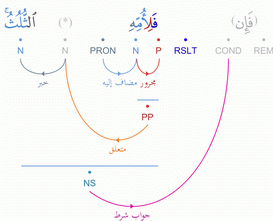
Thereby, the One-third is apportioned for his Mother.
This is the apodosis clause comprising of an inverted nominal sentence. If the deceased man did not have a son but his parents are alive, then the one-third will stand apportioned for his mother. This clause is modified if another condition was co-existing:
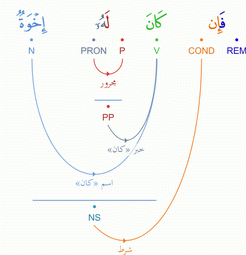
However, if brothers and sisters of the deceased also existed:
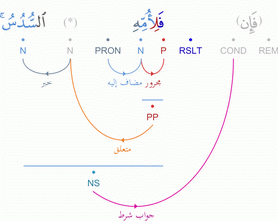
Thereby, the One-Sixth shall be the share apportioned for his Mother.
The share of one-third; allocated for the mother of the deceased who died without leaving a son but both parents are alive, is reduced to one-sixth if the siblings of the deceased were also alive.
When the died person did not have a son and his parents are alive, the inalienable share allocated is only for mother either as one-third or one-sixth if the siblings of the deceased also existed. The right of mother who gave birth to the deceased is protected. This takes care of siblings of the deceased who might be from his step mother/s.
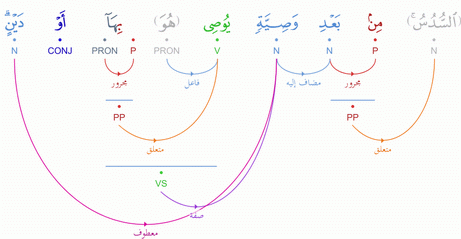
This mandatory
apportionment must be executed in times after bequest with which the
person expecting death is
presently
bequeathing
[for Mother
and Father, Nearer Relatives-all who are
 ]
OR after meeting the debt-obligation of
promissory business transaction, outstanding liability.
]
OR after meeting the debt-obligation of
promissory business transaction, outstanding liability.
It is a dependent clause.


 :
Grammatically, it is an indivisible unit
comprising of Prepositional Phrase coupled with Possessive Phrase.
Semantically, the
preposition functions to illustrate a logical, temporal, or spatial
relationship between the object of the prepositional phrase and the
other components of the sentence. The prepositional phrase modifies a
verb as well a noun. The prepositional phrase links back to the first
verbal sentence of Ayah:
Allah the Exalted is enjoining upon you people; is
binding-tying-exhorting you the parents. According to grammarian, it can also be taken as
[أو بمحذوف حال من السدس]
relating to elided circumstantial clause for the preceding noun:
the one-sixth. Yet another grammatical estimation
about this prepositional phrase could be that it relates to elided
predicate of subject which is also elided.
:
Grammatically, it is an indivisible unit
comprising of Prepositional Phrase coupled with Possessive Phrase.
Semantically, the
preposition functions to illustrate a logical, temporal, or spatial
relationship between the object of the prepositional phrase and the
other components of the sentence. The prepositional phrase modifies a
verb as well a noun. The prepositional phrase links back to the first
verbal sentence of Ayah:
Allah the Exalted is enjoining upon you people; is
binding-tying-exhorting you the parents. According to grammarian, it can also be taken as
[أو بمحذوف حال من السدس]
relating to elided circumstantial clause for the preceding noun:
the one-sixth. Yet another grammatical estimation
about this prepositional phrase could be that it relates to elided
predicate of subject which is also elided.
Whatever grammatical
function is assigned, even if all are considered simultaneously, it will
make no difference in meanings
because:
:
It
is a Time Adverb signifying a point in time somewhere in
timeline after:
,
bequeath. The prepositional phrase illustrates temporal relationship functioning
adverbially. Time adverb is first noun of construct with:
bequest.
It is a Verbal Noun denoting act and state inherent in verb
and its Root. It signifies cautious decision of a
person expecting death giving oral statement about what he or she wants
to happen to his or her wealth, moveable and immovable property after he
or she dies, or leaves a legal document containing this statement.
Which bequeath is
this?

 :
"He is presently bequeathing about it". This verbal sentence is
the adjectival description of:
a
bequest.. The Verb is
imperfect;
third person; masculine; singular; in Indicative Mood. It is transitive
Form IV Verb,
مصدر-إِيْصَاءٌ
Verbal noun. The subject of verb is hidden and refers to
the Man referred earlier. The third person singular feminine pronoun
in the Prepositional Phrase refers back to:
bequest.
:
"He is presently bequeathing about it". This verbal sentence is
the adjectival description of:
a
bequest.. The Verb is
imperfect;
third person; masculine; singular; in Indicative Mood. It is transitive
Form IV Verb,
مصدر-إِيْصَاءٌ
Verbal noun. The subject of verb is hidden and refers to
the Man referred earlier. The third person singular feminine pronoun
in the Prepositional Phrase refers back to:
bequest.

 :
By the appositive-coordinating conjunction particle it conjuncts to the
earlier Prepositional Phrase and thus denotes:
"OR after meeting the debt-obligation of promissory business transaction,
outstanding liability". This dependent clause phrases restrict the operation of all
injunctions given earlier to take effect afterwards and thus modifies,
supersedes the bequeath and allows distribution as ordered after
discharging the debt obligations of the deceased.
:
By the appositive-coordinating conjunction particle it conjuncts to the
earlier Prepositional Phrase and thus denotes:
"OR after meeting the debt-obligation of promissory business transaction,
outstanding liability". This dependent clause phrases restrict the operation of all
injunctions given earlier to take effect afterwards and thus modifies,
supersedes the bequeath and allows distribution as ordered after
discharging the debt obligations of the deceased.
The most conspicuous fact in the discourse on inheritance we have so far read is that except giving a ratio formula when females and male are partners-co sharer in the wealth, Allah the Exalted has not allocated inalienable share for a son. General psyche of majority is that they have longing for sons. Allah the Exalted draws attention of the people towards the fact:
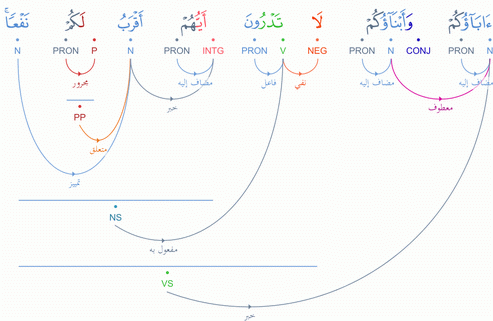
The Fathers and
the Sons of you people; you know
not with certainty who of them are more nearer
for you, nearer in context of beneficent [on Day of Judgment].
This is a simple sentence though it comprises of three sentences. Predicate of nominal sentence is a verbal sentence. And another complete nominal sentence is there functioning as object of the verb.

 :
This verbal sentence is the Predicate of nominal sentence.
:
This verbal sentence is the Predicate of nominal sentence.


 :
This simple sentence is functioning as the Object of preceding verb.
:
This simple sentence is functioning as the Object of preceding verb.
 :
This verbal noun is [تمييز] disambiguating
the preceding comparative noun, the predicate of sentence.
:
This verbal noun is [تمييز] disambiguating
the preceding comparative noun, the predicate of sentence.
After this parenthetic clause, it is declared about the aforementioned apportionment of shares:
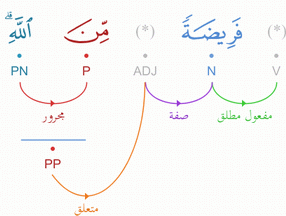
This Ordinance regards permanently determined apportionment of inheritance is a time bound obligation imposed by Allah the Exalted.
 :
It is
[الصفة
المشبهة] Adjective resembling - functioning as passive participle and
adverbially:
Indefinite; feminine; singular; accusative.
It is functioning as [المفعول
المطلق]
Cognate Adverb. It explains the manner
in which the action takes place and to place
emphasis on the action. The emphasis expressed through cognate adverbs
is usually one of the most intense forms.
:
It is
[الصفة
المشبهة] Adjective resembling - functioning as passive participle and
adverbially:
Indefinite; feminine; singular; accusative.
It is functioning as [المفعول
المطلق]
Cognate Adverb. It explains the manner
in which the action takes place and to place
emphasis on the action. The emphasis expressed through cognate adverbs
is usually one of the most intense forms.
Its Root is "ف ر ض". The basic perception infolded is that of cutting something solid and hard which entails assessment and marking as to how, from where and how much be the incision and cutting. Since markings assign a distinct apportioning from the whole, it gives the signification of allocating, earmarking, prescribing or specifying the share. Therefore, it also signifies something made obligatory-ordained-prescribed at a given point in time. Reference to point in time is built in the perception of Root. The Adjective resembling participle, or termed as Verbal Adjective is a noun derived from an intransitive verb in order to signify the one that establishes an action with the meaning of permanence.

 :
Prepositional phrase [متعلقان بمحذوف صفة
فريضة] relates to elided adjective of the
preceding cognate adverb.
:
Prepositional phrase [متعلقان بمحذوف صفة
فريضة] relates to elided adjective of the
preceding cognate adverb.
The fact that the apportionment of inheritance ordained is based upon absolute justice is emphasized by mentioning the following information about Allah the Exalted:

The fact remains that Allah the Exalted is absolutely Knowledgeable, the knower of invisible-hidden realities-considerations and the Infinitely Just Supreme Administrator of the created realms.
Syntactic analysis
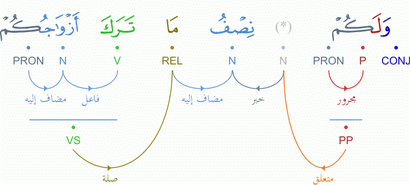
And half of the wealth which your Wives have left is apportioned for you: the husbands;
It is a simple inverted nominal sentence.
وَ: Conjunction particle [حرف عطف]. It is a coordinator that links to element in the preceding discourse.
:
Prepositional Phrase:
لَ
Inseparable preposition + Personal Pronoun: Second person; masculine;
plural; genitive state. This phrase relates to elided fronted predicate.
It means "..is apportioned for you the bereaved husbands of wives".

 :
It is a possessive phrase. The first noun, ordinal number, is definite by construct
Relative Pronoun and is the delayed Subject of the sentence; It means
"the half of that which..."
:
It is a possessive phrase. The first noun, ordinal number, is definite by construct
Relative Pronoun and is the delayed Subject of the sentence; It means
"the half of that which..."
 :
This verbal sentence is the Linkage clause for the Relative Pronoun and
object of verb is elided.
:
This verbal sentence is the Linkage clause for the Relative Pronoun and
object of verb is elided.
But this allocation is tagged with a condition:
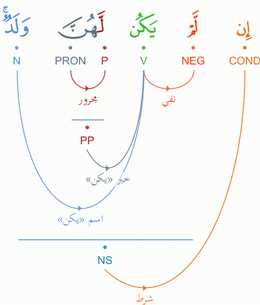
Provided that solitary son is not surviving for them: deceased wives ["for them" was no son includes previous husband's, if any].
:
It is
Particle of condition which renders the following verb in
Jussive state; means "if, should"
:
The past tense event is negated by
preceding the verb with particle of negation: لَمْ.
The particularity of this particle is that the form of the past tense is
substituted with the same tense of imperfect verb and the present tense
verb is transformed into jussive mood.
 : Prepositional
Phrase: لَ
Inseparable Preposition
+ Personal
pronoun: third person; feminine; plural; in genitive state, meaning "for
them the deceased wives". It relates to elided predicate of the
deficient verb. The apodosis clause of this conditional sentence is elided
since the effect of condition has already been mentioned.
: Prepositional
Phrase: لَ
Inseparable Preposition
+ Personal
pronoun: third person; feminine; plural; in genitive state, meaning "for
them the deceased wives". It relates to elided predicate of the
deficient verb. The apodosis clause of this conditional sentence is elided
since the effect of condition has already been mentioned.
:
Noun: Indefinite; singular; masculine;
nominative. It is [اسم يكن]
the subject noun of deficient perfect verb.
The fortune will diminish if the ground reality was different from the above:
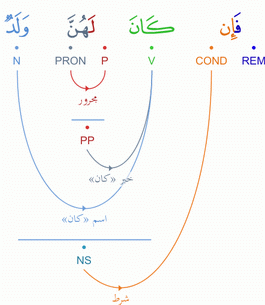
However, in case there were solitary son for the deceased wives:
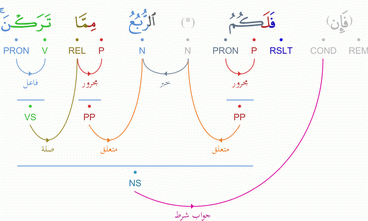
Thereby, the one-fourth is apportioned as your share out of that which they have left.
This is the apodosis clause comprising of an inverted nominal simple sentence.
 :
Prefixed conjunction
فَ
which shows cause and effect and is Linkage for Apodosis,
meaning "thereby, sequel to above reason"; + Prepositional
Phrase:
لَ
Inseparable preposition + Personal Pronoun: Second person;
masculine; plural; genitive state, with added vowel sign for reason of
cluster of two vowel-less consonants. This phrase relates
to elided fronted predicate of the sentence.
:
Prefixed conjunction
فَ
which shows cause and effect and is Linkage for Apodosis,
meaning "thereby, sequel to above reason"; + Prepositional
Phrase:
لَ
Inseparable preposition + Personal Pronoun: Second person;
masculine; plural; genitive state, with added vowel sign for reason of
cluster of two vowel-less consonants. This phrase relates
to elided fronted predicate of the sentence.
 : Noun; definite; masculine; nominative.
It is the Subject of sentence; means "the one-fourth".
: Noun; definite; masculine; nominative.
It is the Subject of sentence; means "the one-fourth".
It is a Prepositional
Phrase comprising of preposition
and its object is Relative pronoun
with "ن" having been assimilated. It
relates to the preceding subject of the sentence; "of that
which":
 Verb: Perfect; Third person; plural;
feminine;
نَ Subject pronoun, in nominative
state مصدر-تَرْكٌ Verbal Noun.
It is linkage clause for the preceding Relative Pronoun and its object
is elided.
Verb: Perfect; Third person; plural;
feminine;
نَ Subject pronoun, in nominative
state مصدر-تَرْكٌ Verbal Noun.
It is linkage clause for the preceding Relative Pronoun and its object
is elided.
These are two provisions for allocating share for the bereaved husband in case of death of his wife. If she had no son, the share allocated for her bereaved husband is one-half of her left wealth, otherwise it will be one-fourth if she has also a son to mourn her.
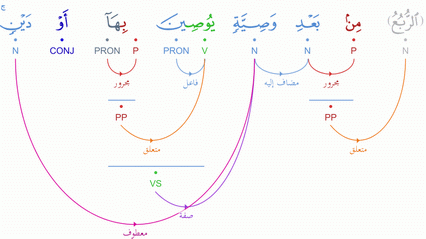
This mandatory
apportionment must be executed in times after the bequest that wives expecting death are
presently
bequeathing
[for Mother
and Father, Nearer Relatives like orphaned grand-progeny-all who are
]
OR after meeting the debt-obligation of
promissory business transaction, outstanding liability,
It is a dependent clause.
:
Grammatically, it is an indivisible unit comprising of Prepositional Phrase coupled with Possessive Phrase.
Semantically, the
preposition functions to illustrate a logical, temporal, or spatial
relationship between the object of the prepositional phrase and the
other components of the sentence. The prepositional phrase modifies a
verb as well a noun. The prepositional phrase
relates
[بمحذوف حال]
to elided circumstantial clause for the preceding noun:
the one-fourth.
:
It
is a Time Adverb signifying a point in time somewhere in
timeline after:
,
bequeath. The prepositional phrase illustrates temporal relationship functioning
adverbially. Time adverb is first noun of construct with:
bequest.
It is a Verbal Noun denoting act and state inherent in verb
and its Root. It signifies cautious decision of a
person expecting death giving oral statement about what he or she wants
to happen to his or her wealth, moveable and immovable property after he
or she dies, or leaves a legal document containing this statement.
Which bequeath is
this?
 :
"They are presently bequeathing about it". This verbal sentence is
the adjectival description of:
a
bequest.. The Verb is
imperfect;
third person; feminine; plural; in Indicative Mood. It is transitive
Form IV Verb,
مصدر-إِيْصَاءٌ
Verbal noun. The third person singular feminine pronoun
in the Prepositional Phrase refers back to:
bequest.
:
"They are presently bequeathing about it". This verbal sentence is
the adjectival description of:
a
bequest.. The Verb is
imperfect;
third person; feminine; plural; in Indicative Mood. It is transitive
Form IV Verb,
مصدر-إِيْصَاءٌ
Verbal noun. The third person singular feminine pronoun
in the Prepositional Phrase refers back to:
bequest.
:
By the appositive-coordinating conjunction particle it conjuncts to the
earlier Prepositional Phrase and thus denotes:
"OR after meeting the debt-obligation of promissory business transaction,
outstanding liability". This dependent clause phrases restrict the operation of all
injunctions given earlier to take effect afterwards and thus modifies,
supersedes the bequeath and allows distribution as ordered after
discharging the debt obligations of the deceased.
Share of surviving wife in the inheritance of her deceased husband:
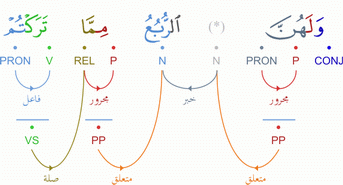
And one fourth is apportioned for them: wives out of wealth which you have left:
It is a simple inverted nominal sentence.
وَ: Conjunction particle [حرف عطف]. It is a coordinator that links to element in the preceding discourse.
 :
This is a Prepositional Phrase; preposition denotes "for"
indicating that something is directed at somebody, done to benefit
somebody. The object pronoun is third person, plural, feminine. This
phrase relates to the elided predicate of the subject "the one-fourth of
wealth--". The sentence literally means "the
one-fourth
of wealth which the deceased
husband has left
shall be the apportionment for them: the bereaved wives".
:
This is a Prepositional Phrase; preposition denotes "for"
indicating that something is directed at somebody, done to benefit
somebody. The object pronoun is third person, plural, feminine. This
phrase relates to the elided predicate of the subject "the one-fourth of
wealth--". The sentence literally means "the
one-fourth
of wealth which the deceased
husband has left
shall be the apportionment for them: the bereaved wives".
: Noun; definite; masculine; nominative.
It is the Subject of sentence; means "the one-fourth".
It is a Prepositional
Phrase comprising of preposition
and its object is Relative pronoun with "ن" having been assimilated. It
relates to the preceding subject of the sentence; "one-fourth of that
which--":
 : Verb:
Perfect; Second Person; plural; masculine; [التاء]
Subject Pronoun, in nominative state;
مصدر-تَرْكٌ Verbal Noun.Verb: It is linkage clause for the preceding Relative Pronoun and
its object is elided. These three words mean: "you the husbands
have left".
: Verb:
Perfect; Second Person; plural; masculine; [التاء]
Subject Pronoun, in nominative state;
مصدر-تَرْكٌ Verbal Noun.Verb: It is linkage clause for the preceding Relative Pronoun and
its object is elided. These three words mean: "you the husbands
have left".
But this allocation is tagged with a condition:
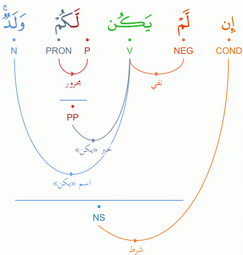
Provided a solitary son is not surviving for you the husbands.
It is a conditional clause to effect the preceding injunction.
:
Conditional Particle.
:
The past tense event is negated by
preceding the verb with particle of negation: لَمْ.
The particularity of this particle is that the form of the past tense is
substituted with the same tense of imperfect verb and the present tense
verb is transformed into jussive mood.
 : Prepositional
Phrase: لَ
Inseparable Preposition
+ Personal Pronoun:
Second person; masculine; plural, in genitive state; meaning "for
you
the husbands". It relates to elided predicate of the
deficient verb. The apodosis clause of this conditional sentence is elided
since its effect has already been mentioned.
: Prepositional
Phrase: لَ
Inseparable Preposition
+ Personal Pronoun:
Second person; masculine; plural, in genitive state; meaning "for
you
the husbands". It relates to elided predicate of the
deficient verb. The apodosis clause of this conditional sentence is elided
since its effect has already been mentioned.
:
Noun: Indefinite; singular; masculine;
nominative. It is [اسم يكن]
the subject noun of deficient perfect verb.
The fortune will diminish if the ground reality was different from the above:
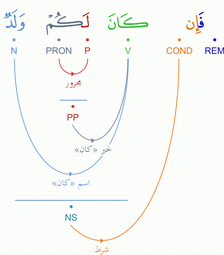
However, in case there were solitary son for you, thereby, the one eighth is apportioned for them: bereaved wives out of that which you have left.
It is a conditional clause
"فَ ": This sentence begins with a conjunction particle "فَ " which is distinct from conjunction particle "وَ"; Particle "فَ " illustrates a sequence, cause and effect relationship; and can link a subsequent condition clause with the preceding sentence to indicate a situation-reality-predication different to-instead of the earlier one.
:
It is
Particle of condition which renders the following verb in
Jussive state; means "if, should".
Verb:
Perfect; third person; singular; masculine;
: Prepositional
Phrase: لَ
Inseparable Preposition
+ Personal Pronoun:
Second person; masculine; plural, in genitive state; meaning "for
you
the husbands". It relates to elided predicate of the
deficient verb. The apodosis clause of this conditional sentence is elided
since its effect has already been mentioned.
:
Noun: Indefinite; singular; masculine;
nominative. It is [اسم يكن]
the subject noun of deficient perfect verb.
The conditional sentence is followed by its apodosis clause:
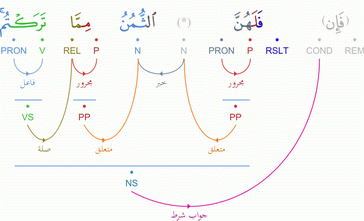
Thereby, the one-eighth is apportioned for them: bereaved wives out of that you have left.
This apodosis clause in an inverted nominal sentence beginning with conjunction particle "فَ "
فَلَهُنَّ : This is a Prepositional Phrase; preposition denotes "for" indicating that something is directed at somebody, done to benefit somebody. The object pronoun is third person, plural, feminine. This phrase relates to the elided predicate of the subject. The sentence literally means "Thereat , the one-eighth of wealth which you the husbands have left shall be the apportionment for them: bereaved wives".
 Noun: Ordinal Number definite; nominative;
the eighth;.
It is the subject of sentence.
Noun: Ordinal Number definite; nominative;
the eighth;.
It is the subject of sentence.
It is a Prepositional
Phrase comprising of preposition
and its object is Relative pronoun with "ن" having been assimilated. It
relates to the preceding subject of the sentence; "one-fourth of that
which--":
: Verb:
Perfect; Second Person; plural; masculine; [التاء]
Subject Pronoun, in nominative state;
مصدر-تَرْكٌ Verbal Noun.Verb: It is linkage clause for the preceding Relative Pronoun and
its object is elided. These three words mean: "you the husbands
have left".
These are two provisions for allocating share for the bereaved wives in case of death of their husbands. If he had no son, the share allocated for his bereaved wife/wives is one-fourth of his left wealth, otherwise it will be one-eighth if he has also a son to mourn him.
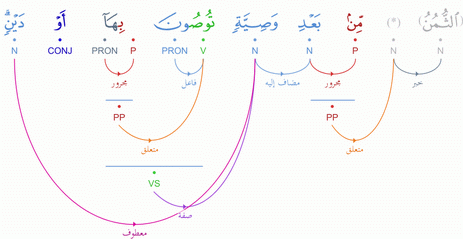
This mandatory
apportionment must be executed in times after bequest with which
you-husbands expecting death are
presently bequeathing
[for Mother
and Father, Near Relatives like orphaned grand-progeny-all who are
]
OR after meeting the debt-obligation of
promissory business transaction, outstanding liability.
It is a dependent clause.
:
Grammatically, it is an indivisible unit
comprising of Prepositional Phrase coupled with Possessive Phrase.
Semantically, the
preposition functions to illustrate a logical, temporal, or spatial
relationship between the object of the prepositional phrase and the
other components of the sentence. The prepositional phrase modifies a
verb as well a noun. The prepositional phrase
relates
[بمحذوف حال]
to elided circumstantial clause for the preceding noun:
the one-eighth.
:
It
is a Time Adverb signifying a point in time somewhere in
timeline after:
,
bequeath. The prepositional phrase illustrates temporal relationship functioning
adverbially. Time adverb is first noun of construct with:
bequest.
It is a Verbal Noun denoting act and state inherent in verb
and its Root. It signifies cautious decision of a
person expecting death giving oral statement about what he or she wants
to happen to his or her wealth, moveable and immovable property after he
or she dies, or leaves a legal document containing this statement.
Which bequeath is
this?
 :
"You are presently bequeathing about it". This verbal sentence is
the adjectival description of:
a
bequest.. The Verb is
Imperfect; second person; plural; Mood:
Indicative; [Form-IV]; [و] Subject
Pronoun-nominative state;
مصدر-إِيْصَاءٌ
Verbal noun.
The third person singular feminine pronoun
in the Prepositional Phrase refers back to:
bequest.
:
"You are presently bequeathing about it". This verbal sentence is
the adjectival description of:
a
bequest.. The Verb is
Imperfect; second person; plural; Mood:
Indicative; [Form-IV]; [و] Subject
Pronoun-nominative state;
مصدر-إِيْصَاءٌ
Verbal noun.
The third person singular feminine pronoun
in the Prepositional Phrase refers back to:
bequest.
:
By the appositive-coordinating conjunction particle it conjuncts to the
earlier Prepositional Phrase and thus denotes:
"OR after meeting the debt-obligation of promissory business transaction,
outstanding liability". This dependent clause phrases restrict the operation of all
injunctions given earlier to take effect afterwards and thus modifies,
supersedes the bequeath and allows distribution as ordered after
discharging the debt obligations of the deceased.
In the foregoing provisions contained in some sentences of Ayah 4:11 and 4:12 we have found mention of a man; dying while leaving both mother and father alive and alive wife, who has or did not have a son. Similarly we have found mention of a woman; leaving behind her husband, who has or did not have a surviving son at the time of her death. What can be some other ground situation? A man or woman can die who is spouseless at the time of death, either because his/her spouse had already died during his/her lifetime or because they had separated-divorced; and are survived by a son and a single parent, either mother or father:
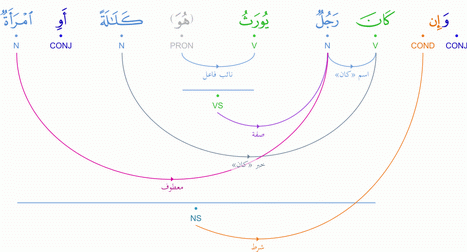
However, if it were a man or a woman, single-spouseless, survived by a single parent and a son;
It is conditional sentence conjunct to preceding sentences about spouses.
وَ: Conjunction particle [حرف عطف]. It is a coordinator that links to element in the preceding discourse.
:
It is
Particle of condition which renders the following verb in
Jussive state; means "if, should".
: Verb:
Perfect; third person; singular; masculine;
 : Noun:
Indefinite; masculine; singular; nominative.
It is the Subject noun of deficient verb.
: Noun:
Indefinite; masculine; singular; nominative.
It is the Subject noun of deficient verb.
 :
Verb: Imperfect; third person; singular;
masculine; Passive;
Mood: Indicative; [Form-IV]; Proxy Subject pronoun
hidden; مصدر-إِيْرَاثٌ
Verbal noun. This verbal sentence is the Predicate of deficient verb;
"And If a man is being inherited...". This passive sentence
indicates that a spouseless man or woman is inherited by a son and a single
parent/or without any of them.
:
Verb: Imperfect; third person; singular;
masculine; Passive;
Mood: Indicative; [Form-IV]; Proxy Subject pronoun
hidden; مصدر-إِيْرَاثٌ
Verbal noun. This verbal sentence is the Predicate of deficient verb;
"And If a man is being inherited...". This passive sentence
indicates that a spouseless man or woman is inherited by a son and a single
parent/or without any of them.
 : Verbal
Noun: Indefinite; accusative. It is the circumstantial clause; indicates
the spouseless state in which a man or a woman is inherited.
: Verbal
Noun: Indefinite; accusative. It is the circumstantial clause; indicates
the spouseless state in which a man or a woman is inherited.
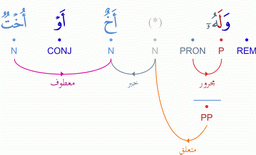
While a brother or a sister is also alive to bereave him/her,
This inverted nominal sentence is [الجملة حالية] the circumstantial clause giving further information about the circumstances in which the spouseless person has died. It initiates with: وَ Conjunction particle [حرف عطف]. It is a coordinator that links to the preceding sentence.
 : Noun:
Indefinite; singular; masculine; nominative.
It is the delayed subject of the sentence; a brother;
: Noun:
Indefinite; singular; masculine; nominative.
It is the delayed subject of the sentence; a brother;
 :
Or a sister;
:
Or a sister;
: Prepositional
Phrase: لَ
Inseparable Preposition
+ Personal Pronoun:
Third person; masculine; singular, in genitive state; meaning "for him
the deceased". It relates to elided predicate of the
sentence. The singular masculine pronoun
refers to the deceased Man.
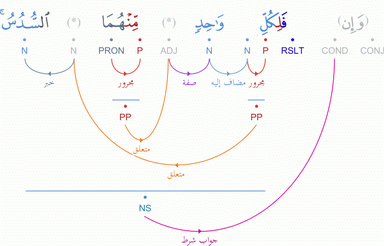
Thereby, one sixth out of that which such man or woman has left is apportioned for either, be a brother or sister.
This is the apodosis clause beginning with conjunction/apodosis particle "فَ ". It is inverted nominal sentence.
:
It is definite ordinal number. This is the delayed subject of the nominal sentence
meaning the one-sixth.
لكل واحد: It is a prepositional phrase coupled with possessive Phrase. It relates to the elided fronted predicate.
Prepositional
Phrase:
Separable Preposition + Attached pronoun : Third person; dual;
in genitive state. It relates to the adjectival specification of
preceding noun واحد
. It is whether a brother or a
sister, the one-sixth will be given to him or her. However, if the
surviving sibling are more than a brother or sister, the provision is
made for them as under:
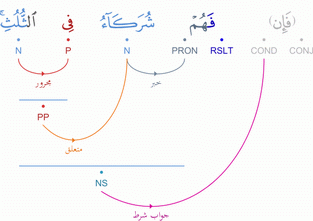
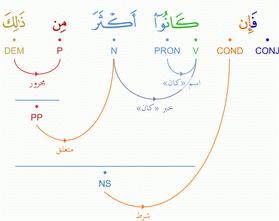
However, in case they are more than one sibling, thereby, they all are the sharer in one third.
The condition clause is conjunct with the preceding clause by conjunction particle "fa", which substitutes it if the circumstances were different as mentioned in the following condition clause, and the effect will also be different as stated in the apodosis clause.
The time frame when the aforesaid injunctions will take effect is described:
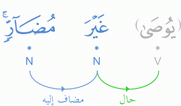
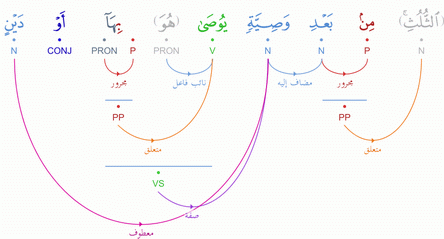
This mandatory
apportionment must be executed in times after bequest which is being
bequeathed expecting death
[for Mother
or Father, Son, Near Relatives-all who are
]
when it is
void of inclination-evident injustice by the
testator
[if so this can be modified as permitted in
2:182]
OR meeting the debt-obligation of
promissory business transaction, outstanding liability.
This Binding Ordinance of Apportionment of Inheritance is promulgated by Allah the Exalted for adhering it-ever sticking to it.
This clause is similar as is mentioned for other
diseased persons. The difference is the Passive Verb:
 while in other cases the verbs are in active voice. It covers both the
cases whether the deceased was a spouseless man or a woman.
while in other cases the verbs are in active voice. It covers both the
cases whether the deceased was a spouseless man or a woman.

 :
This Possessive Phrase is the circumstantial clause for the hidden proxy
subject noun of preceding passive verb.
It means the bequest
it is void of inclination-evident injustice by the
testator.
:
This Possessive Phrase is the circumstantial clause for the hidden proxy
subject noun of preceding passive verb.
It means the bequest
it is void of inclination-evident injustice by the
testator.
After the aforementioned apportionment of shares it is declared:
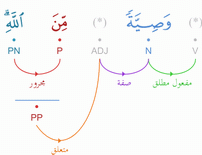
This Binding Ordinance of Apportionment of Inheritance is promulgated by Allah the Exalted for adhering it-ever sticking to it.
It is functioning as [المفعول المطلق] Cognate Adverb. It explains the manner in which the action takes place and to place emphasis on the action. The emphasis expressed through cognate adverbs is usually one of the most intense forms.
 Verbal Noun:
Indefinite; accusative. It is functioning as [المفعول
المطلق]
Cognate Adverb. It explains the manner
in which the action takes place and to place
emphasis on the action. The emphasis expressed through cognate adverbs
is usually one of the most intense forms.
Verbal Noun:
Indefinite; accusative. It is functioning as [المفعول
المطلق]
Cognate Adverb. It explains the manner
in which the action takes place and to place
emphasis on the action. The emphasis expressed through cognate adverbs
is usually one of the most intense forms.
:
Prepositional phrase [متعلقان بمحذوف صفة] relates to elided adjective of the
preceding cognate adverb.
The fact that the apportionment of inheritance ordained is based upon absolute knowledge and to emphasize importance of forbearance the following information about Allah the Exalted:
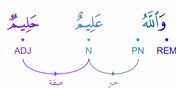
Be mindful that Allah the Exalted is Eternally All-Knowing, eternally imperturbably Forbearing.
This is a Nominal sentence, the subject followed by predicates; or the last two words can also be taken as adjectival phrase..
Recurrences:
Recurrence:(1)4:11(2)9:60=2
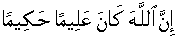 [Recurrence: 4:24;33:01;
76:30]
[Recurrence: 4:24;33:01;
76:30]
 [Similar pronouncement in
22:59;33:51]
[Similar pronouncement in
22:59;33:51]

 Recurrence:
(1)2:187(2)2:229(3)2:230(4)4:13(5)58:04(6)65:01=6 [Same in
24:52;33:71;48:17]
Recurrence:
(1)2:187(2)2:229(3)2:230(4)4:13(5)58:04(6)65:01=6 [Same in
24:52;33:71;48:17]
 Recurrence:
(1)4:13(2)24:52(3)33:71(4)48:17=4
Recurrence:
(1)4:13(2)24:52(3)33:71(4)48:17=4


 Recurrence:
(1)4:13(2)5:119(3)9:89(4)9:100(5)61:12(6)64:09=6
Recurrence:
(1)4:13(2)5:119(3)9:89(4)9:100(5)61:12(6)64:09=6
 Recurrence:(1)4:14(2)33:36(3)72:23=3

 Recurrence:(1)2:90(2)3:178(3)4:14(4)22:57(5)31:06(6)45:09(7)58:05(8)58:16=8
إعرا ب القرآن Syntactic Analysis
|
1 |
فعل مضارع مرفوع بالضمة المقدرة على الياء لثقل/صيغة:واحد مذكرغائب -باب افعال كُم-ضمير متصل مبنى على الضم في محل نصب مفعول به مقدم/جمع مذكر حاضر |
232 |
|
|
فاعل |
|
3 |
|
متعلقان يُوصِيكُمُ |
|
4 |
|
|
5 |
جار و مجرور= حرف جر + اسم:معرفہ باللام مجرور-واحد مذكر |
الجار والمجرور متعلقان بمحذوف خبر مقدم/الجملة مقول القول |
|
6 |
|
مبتدأ مؤخر |
|
7 |
اسم:معرفہ مجرور-واحد مذكر |
مضاف إليه/مضاف |
|
8 |
|
مضاف إليه |
|
9 |
|
|
10 |
فعل ماضٍ ناقص مبنى على السكون لاتصاله بنون النسوة فى محل جزم فعل الشرط نون النسوة-ضمير متصل فى محل رفع جمع مؤنث غائب اسم كَانَ |
في محل جزم فعل الشرط |
|
11 |
|
خبر |
|
12 |
|
ظرف مكان متعلق بمحذوف صفة لنساء |
|
13 |
|
مضاف إليه |
|
14 |
حرف فَ + جار و مجرور = لَ حرف جر + ضمير متصل-جمع مؤنث غائب في محل جر |
الفاء رابطة لجواب الشرط/ لهن متعلقان بمحذوف خبر |
|
16 |
|
مبتدأ مرفوع بالألف لأنه مثنى |
|
16 |
|
في محل جر بالإضافة |
|
17 |
فعل ماضٍ مبنى على الفتح /الفاعل:ضمير مستتر جوازاً تقديره:هُوَ-واحد مذكرغائب |
الجملة صلة الموصول/والعائد محذوف أي تركه |
|
18 |
|
|
19 |
|
|
20 |
|
|
21 |
|
خبر كانت |
|
22 |
حرف فَ + جار و مجرور = لَ حرف جر + ضمير متصل-واحد مؤنث غائب في محل جر |
الفاء رابطة لجواب الشرط/متعلقان بمحذوف خبر |
|
23 |
اسم :معرفہ باللام-مرفوع- واحد مذكر |
مبتدأ مؤخر |
|
24 |
|
|
25 |
جار و مجرور + الإِضَافَةُ = حرف جر الإِضَافَةُ-اسم:مجرور-تثنية مذكرو حذفت نون للاضافة/مضاف + ضمير متصل-واحد مذكرغائب في محل جر-مضاف إليه |
متعلقان بمحذوف خبر مقدم |
|
26 |
|
لكل بدل من أبويه |
|
27 |
|
مضاف إليه |
|
28 |
جار و مجرور = حرف جر + -ضمير متصل مبنى على الضم فى محل جر/تثنية غائب |
متعلقان بمحذوف صفة |
|
29 |
|
مبتدأ مؤخر |
|
30 |
|
متعلقان السدس |
|
31 |
|
صلة |
|
32 |
|
|
فعل ماضٍ ناقص مبنى على الفتح/الفاعل:ضمير مستتر جوازاً تقديره:هُوَ-واحد مذكر غائب في محل رفع اسم كان |
|
34 |
جار و مجرور = لِ حرف جر + ضمير متصل-واحد مذكرغائب في محل جر |
متعلقان بالخبر المحذوف |
|
35 |
|
اسم كان |
|
36 |
|
|
37 |
|
|
38 |
|
|
39 |
جار و مجرور = لِ حرف جر + ضمير متصل-واحد مذكرغائب في محل جر |
متعلقان بمحذوف خبر يكن |
|
40 |
|
اسم يكن |
|
41 |
|
|
42 |
فعل ماضٍ مبنى على الفتح /صيغة:-واحد مذكرغائب/ضمير متصل في محل نصب مفعول به مقدم/واحد مذكرغائب |
|
43 |
الإِضَافَةُ-اسم: مرفوع بالألف لأنه مثنى و حذفت نون للاضافة/مضاف + ضمير متصل-واحد مذكرغائب في محل جر-مضاف إليه |
فاعل مرفوع بالألف لأنه مثنى |
|
44 |
لِ حرف جر + اسم: مجرور-واحد-مؤنث/مضاف + ضمير متصل-واحد مذكر غائب في محل جر-مضاف إليه |
متعلقان بمحذوف خبر مقدم |
|
45 |
|
مبتدأ/الجملة في محل جزم جواب الشرط |
|
46 |
|
|
47 |
فعل ماضٍ ناقص مبنى على الفتح/الفاعل:ضمير مستتر جوازاً تقديره:هُوَ-واحد مذكر غائب في محل رفع اسم كان |
|
48 |
|
|
49 |
|
|
50 |
حرف فَ + جار و مجرور + الإِضَافَةُ لِ حرف جر + اسم: مجرور-واحد-مؤنث/مضاف + ضمير متصل-واحد مذكر غائب في محل جر-مضاف إليه |
|
51 |
|
The one sixth |
|
52 |
|
متعلقان بيوصيكم/أو بمحذوف حال من السدس |
|
53 |
|
|
54 |
|
مضاف إليه |
|
55 |
فعل مضارع مرفوع بالضمة المقدرة على الياء لثقل/لفاعل:ضمير مستتر جوازاً تقديره:هُوَ-واحد مذكرغائب -باب افعال |
الجملة في محل جر صفة |
|
56 |
جار و مجرور = بِ حرف جر + ضمير متصل-واحد مؤنث غائب في محل جر |
متعلقان بالفعل |
|
57 |
|
|
58 |
|
عطف على وصية |
|
59 |
الإِضَافَةُ-اسم: مرفوع-جمع مكسر مذكر/مضاف + ضمير متصل-جمع مذكر حاضر في محل جر-مضاف إليه |
مبتدأe |
|
60 |
|
|
61 |
الإِضَافَةُ-اسم: مرفوع-جمع مكسر مذكر/مضاف + ضمير متصل-جمع مذكر حاضر في محل جر-مضاف إليه |
عطف |
|
62 |
|
|
63 |
|
خبر |
|
64 |
الإِضَافَةُ-اسم استفهام مرفوع--واحد/مضاف + ضمير متصل-جمع مذكر غائب في محل جر-مضاف إليه |
مبتدأ/الجملة سدت مسد مفعولي تدرون |
|
65 |
|
خبر |
| 66 |
جار و مجرور = لِ حرف جر/الاختصاص + ضمير متصل-جمع مذكر حاضر في محل جر |
متعلقان بالخبر |
| 67 |
|
تمييز |
|
68 |
|
مفعول مطلق لفعل محذوف |
|
69 |
|
متعلقان بمحذوف صفة فريضة |
|
70 |
|
|
71 |
|
|
72 |
|
|
73 |
فعل ماضٍ ناقص مبنى على الفتح/الفاعل:ضمير مستتر جوازاً تقديره:هُوَ-واحد مذكر غائب في محل رفع اسم كان |
الجملة خبر إن |
|
74 |
|
|
75 |
|
306 |
|
1 |
|
307 |
|
2 |
جار و مجرور = لِ حرف جر/الاختصاص + ضمير متصل-جمع مذكر حاضر في محل جر |
متعلقان بمحذوف خبر |
|
3 |
اسم :مرفوع- واحد مذكر |
مبتدأ مؤخر |
|
4 |
|
في محل جر بالإضافة |
|
5 |
|
|
6 |
الإِضَافَةُ-اسم:مرفوع-جمع مكسرمؤنث/مضاف + ضمير متصل-جمع مذكر حاضر/مخاطب في محل جر-مضاف إليه |
فاعل |
|
7 |
|
جواب إن الشرطية محذوف دل عليه ما قبله |
|
8 |
|
|
9 |
|
|
10 |
جار و مجرور = لَ حرف جر + ضمير متصل-جمع مؤنث غائب في محل جر |
|
11 |
|
|
12 |
|
|
13 |
فعل ماضٍ ناقص مبنى على الفتح/الفاعل:ضمير مستتر جوازاً تقديره:هُوَ-واحد مذكر غائب في محل رفع اسم كان |
|
14 |
جار و مجرور = لَ حرف جر + ضمير متصل-جمع مؤنث غائب في محل جر |
|
15 |
|
|
16 |
حرف فَ + جار و مجرور = لِ حرف جر/الاختصاص + ضمير متصل-جمع مذكر حاضر في محل جر |
متعلقان بمحذوف خبر |
|
17 |
|
مبتدأ مؤخر/الجملة في محل جزم جواب الشرط |
|
18 |
|
|
19 |
فعل ماضٍ مبنى على السكون لاتصاله بضمير الرفع المتحرك/نَ: ضمير متصل في محل رفع فاعل-جمع مؤنث غائب |
|
20 |
|
|
21 |
|
|
22 |
|
|
23 |
فعل مضارع مبنى على السكون لاتصاله بضمير الرفع المتحرك/نَ: ضمير متصل في محل رفع فاعل-جمع مؤنث غائب -باب افعال |
|
24 |
جار و مجرور = بِ حرف جر + ضمير متصل-واحد مؤنث غائب في محل جر |
|
25 |
|
|
26 |
|
|
27 |
|
|
28 |
جار و مجرور = لَ حرف جر + ضمير متصل-جمع مؤنث غائب في محل جر |
|
29 |
|
The one fourth |
|
30 |
|
|
31 |
فعل ماضٍ مبنى على السكون لاتصاله بضمير الرفع/تُم-ضمير متصل في محل رفع فاعل جمع مذكرحاضر |
|
32 |
|
|
33 |
|
|
34 |
|
|
35 |
جار و مجرور = لِ حرف جر/الاختصاص + ضمير متصل-جمع مذكر حاضر في محل جر |
|
36 |
|
|
37 |
|
|
38 |
فعل ماضٍ ناقص مبنى على الفتح/الفاعل:ضمير مستتر جوازاً تقديره:هُوَ-واحد مذكر غائب في محل رفع اسم كان |
|
39 |
جار و مجرور = لِ حرف جر/الاختصاص + ضمير متصل-جمع مذكر حاضر في محل جر |
|
40 |
|
|
41 |
|
|
42 |
|
|
43 |
|
|
44 |
فعل ماضٍ مبنى على السكون لاتصاله بضمير الرفع/تُم-ضمير متصل في محل رفع فاعل جمع مذكرحاضر |
|
45 |
|
|
46 |
|
|
47 |
|
|
48 |
فعل مضارع مرفوع بثبوت النون/و-ضمير متصل في محل رفع فاعل-جمع مذكرحاضر/باب افعال |
|
49 |
جار و مجرور = بِ حرف جر + ضمير متصل-واحد مؤنث غائب في محل جر |
|
50 |
|
|
51 |
|
|
52 |
|
|
53 |
|
|
54 |
فعل ماضٍ ناقص مبنى على الفتح/الفاعل:ضمير مستتر جوازاً تقديره:هُوَ-واحد مذكر غائب في محل رفع اسم كان |
|
55 |
|
اسم كان |
|
56 |
|
جملة خبر |
|
57 |
|
حال |
|
58 |
|
|
59 |
|
عطف على رجل |
|
60 |
|
|
61 |
|
متعلقان بمحذوف خبر |
|
62 |
|
مبتدأ/الجملة حالية |
|
63 |
|
|
64 |
اسم: مرفوع-واحد-مؤنث |
عطف على أخ |
|
65 |
حرف فَ + جار و مجرور= لِ حرف جر + اسم: مجرور-واحد مذكر |
لكل متعلقان بمحذوف خبر |
|
66 |
|
|
67 |
جار و مجرور = حرف جر + -ضمير متصل مبنى على الضم فى محل جر/تثنية غائب |
متعلقان بمحذوف صفة واحد |
|
68 |
|
مبتدأ |
|
69 |
|
|
70 |
فعل ماضٍ ناقص مبنى على الضم لاتصاله بواو الجماعة/و- ضمير متصل في محل رفع اسم كان-والألف-فارقة/جمع مذكر غائب |
|
71 |
|
|
72 |
|
متعلقان بأكثر |
|
73 |
|
|
74 |
|
الجملة الاسمية في محل جزم جواب الشرط |
|
75 |
|
|
76 |
|
متعلقان بشركاء |
|
77 |
|
|
78 |
|
|
79 |
|
|
80 |
|
|
81 |
فعل مضارع مبنى للمجهول مرفوع بالضمة المقدرة على الياء لثقل/نائب فاعل:ضمير مستتر جوازاً تقديره:هُوَ-واحد مذكرغائب |
|
82 |
جار و مجرور = بِ حرف جر + ضمير متصل-واحد مؤنث غائب في محل جر |
|
83 |
|
|
84 |
|
|
85 |
|
حال من الضمير المستتر في يوصى |
|
86 |
|
مضاف إليه |
|
87 |
|
مفعول مطلق |
|
88 |
|
متعلقان بمحذوف صفة لوصية |
|
89 |
|
|
90 |
|
|
91 |
|
مبتدأ |
|
92 |
|
خبر |
|
93 |
|
399 خبر |
|
1 |
|
400 |
|
2 |
|
|
3 |
|
|
4 |
|
|
5 |
اِسم شرط جازم مبنى على السكون فى محل رفع مبتدأ |
|
6 |
|
|
7 |
|
|
8 |
|
|
9 |
الإِضَافَةُ- اسم:منصوب-واحد مذكر/مضاف + ضمير متصل-واحد مذكرغائب في محل جر-مضاف إليه |
|
10 |
فعل مضارع مجزوم مبنى على السكون/الفاعل:ضمير مستتر جوازاً تقديره:هُوَ-واحد مذكرغائب/باب افعال ضمير متصل مبنى على الفتح في محل نصب مفعول به / واحد مذكر غائب |
|
11 |
|
|
12 |
|
|
13 |
|
|
14 |
الإِضَافَةُ = ظرف مكان:مجرور/مضاف + ضمير متصل واحد مؤنث غائب في محل جر-مضاف إليه |
|
15 |
اسم:معرفہ باللام-مرفوع-جمع مكسر مؤنث |
|
16 |
|
|
17 |
جار و مجرور= فِيحرف جر+ ضمير متصل في محل جر-واحد-مؤنث غائب |
|
18 |
|
|
19 |
|
|
20 |
|
|
21 |
|
420 |
|
1 |
|
421 |
|
2 |
اِسم شرط جازم مبنى على السكون فى محل رفع مبتدأ |
|
3 |
فعل مضارع مجزوم علامة جزمه حذف آخره حرف العلة/الفاعل:ضمير مستتر جوازاً تقديره:هُوَ-واحد مذكرغائب |
|
4 |
|
|
5 |
|
|
6 |
الإِضَافَةُ- اسم:منصوب-واحد مذكر/مضاف + ضمير متصل-واحد مذكرغائب في محل جر-مضاف إليه |
|
7 |
|
|
8 |
فعل مضارع مجزوم و علامة جزمه حذف آخره حرف العلة/الفاعل:ضمير مستتر جوازاً تقديره:هُوَ-واحد مذكرغائب -باب تَفَعَّلَ |
|
|
9 |
الإِضَافَةُ- اسم:منصوب-جمع مكسرمؤنث/مضاف + ضمير متصل-واحد مذكرغائب في محل جر-مضاف إليه |
|
10 |
فعل مضارع مجزوم مبنى على السكون/الفاعل:ضمير مستتر جوازاً تقديره:هُوَ-واحد مذكرغائب/باب افعال ضمير متصل مبنى على الفتح في محل نصب مفعول به / واحد مذكر غائب |
|
11 |
|
|
12 |
|
|
13 |
جار و مجرور= فِيحرف جر+ ضمير متصل في محل جر-واحد-مؤنث غائب |
|
14 |
|
|
15 |
جار و مجرور = لِ حرف جر + ضمير متصل-واحد مذكرغائب في محل جر |
|
16 |
|
|
17 |
|
437 |






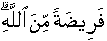










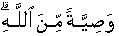

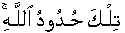


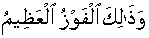
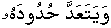


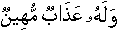


 Appositive/Conjunction particle. [حرف
عطف]
Appositive/Conjunction particle. [حرف
عطف] + Relative pronoun
 with "ن" having been assimilated.
جار و مجرور
= مِن حرف جر + الاسم
الموصول-واحد-مذكر
with "ن" having been assimilated.
جار و مجرور
= مِن حرف جر + الاسم
الموصول-واحد-مذكر


 Prepositional Phrase: لَ
Inseparable Preposition
الإختصاص+ Personal Pronoun:
Third person;
masculine; singular, in genitive state, with prolongation sign.
جار و مجرور
= لِ حرف جر + ضمير متصل-واحد
مذكرغائب
في محل جر
Prepositional Phrase: لَ
Inseparable Preposition
الإختصاص+ Personal Pronoun:
Third person;
masculine; singular, in genitive state, with prolongation sign.
جار و مجرور
= لِ حرف جر + ضمير متصل-واحد
مذكرغائب
في محل جر


 Verb-Like Particle.


 Verbal Noun: Indefinite;
genitive.
(1)4:11(2)4:12(3)4:12(4)4:12=4
مصدر::مجرور
Verbal Noun: Indefinite;
genitive.
(1)4:11(2)4:12(3)4:12(4)4:12=4
مصدر::مجرور


 Noun: indefinite;
feminine; singular;
accusative.
اسم منصوب-واحد-مؤنث
Noun: indefinite;
feminine; singular;
accusative.
اسم منصوب-واحد-مؤنث
